
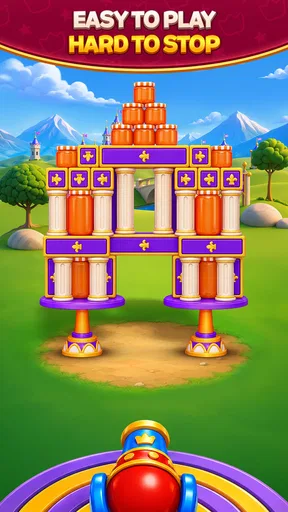
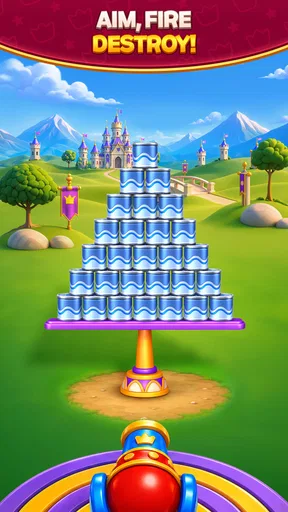
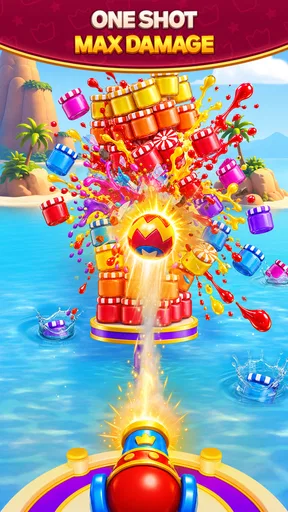
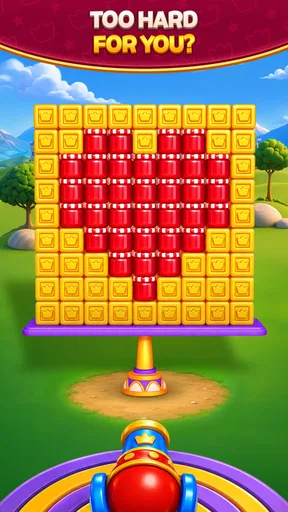
Royal Smash! - Physics Puzzle review
 Analysis by GetAllApps
I enjoy puzzle games most when I can understand the goal quickly but still have to think about the next move. Royal Smash! is a casual physics puzzle from Cypher Games, and its appeal is built around that kind of immediate, hands-on challenge: take an action, see how the puzzle responds, and decide whether to try again or move on. It is free to start, rated for Everyone, and has attracted a 4.6 average from around 454,000 ratings. That is a substantial audience, though popularity alone does not tell you whether its style will suit you.
One move turns the puzzle into a problem
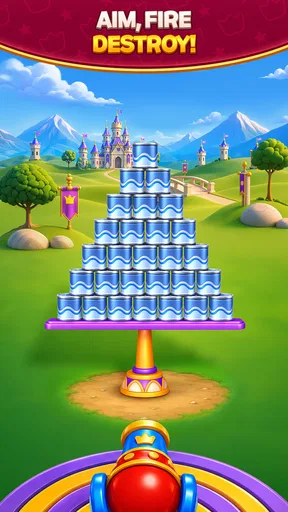
The inviting part of a physics puzzle is that the board is not just something to inspect; it is something to affect. In Royal Smash!, the central pleasure comes from making a move and watching the result unfold. That gives each puzzle a simple first question: what can I change, and what might happen if I do? The answer is often less obvious than the goal, which is where the thinking begins.
I find this format easier to pick up than a puzzle game that asks me to memorize a long set of rules before I can play. A quick session can fit into a short break, while a tricky board can hold my attention longer because I want to work out why a promising move did not lead to the result I expected. The useful habit is to pause briefly before acting and picture the likely chain of movement. Even a rough prediction makes each attempt more informative.
That does not mean every puzzle will feel like a deep strategy exercise. The casual design is better suited to bite-sized decisions than to a sprawling campaign of complicated planning. If you want a game that demands sustained concentration or offers a large tactical system to master, this may feel light. If you want a small problem you can approach without clearing your schedule, the scale is a strength.
Why the physics matters
In a conventional matching puzzle, I tend to focus on patterns and combinations. A physics-led puzzle shifts that attention toward cause and effect: the position of objects, the direction of motion, and how one change can influence what follows. That makes a failed attempt potentially useful. Instead of treating it only as a lost turn, I can use what I saw to refine my next idea.
A practical tip is to avoid changing several assumptions at once in your head. Start with the most obvious interaction, watch what it actually does, and then reconsider the rest of the board. This is a more reliable way to learn a puzzle’s logic than repeatedly guessing at a complete solution. It also makes the game feel fairer: even when I do not solve the challenge immediately, I can often leave an attempt with a clearer sense of what to try next.
The feedback keeps attempts moving
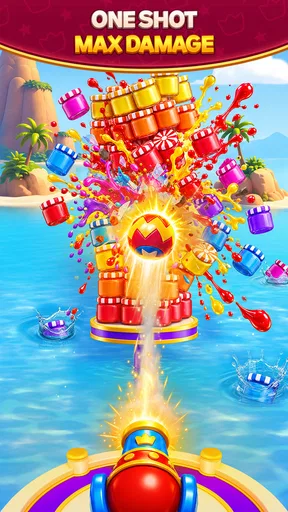
The rhythm that works best here is action, visible consequence, and a quick decision about what to do next. Physics makes that feedback feel more immediate than a puzzle where the board simply changes color or records a combination. When an action sends something moving in an unexpected way, I get a concrete clue about the setup. When it goes as hoped, the satisfaction comes from seeing the plan become real rather than merely selecting the right abstract answer.
That rhythm is also why the game can encourage another attempt. A near miss leaves a clear question in my mind: was the idea wrong, or was the timing or arrangement the issue? I can make a small adjustment and test it. This is a more appealing retry loop than starting over without understanding what changed, although it still depends on the puzzle giving enough visual feedback to make the outcome legible.
There is a trade-off. Players who like calm, predictable board states may find physics outcomes less tidy than a standard tile puzzle. A move can have consequences that are harder to predict at a glance, and that uncertainty is part of the attraction rather than a flaw in itself. But if you dislike trial and error, or become frustrated when a result is not immediately obvious, the same quality may make the game feel less controlled.
Small rewards, with spending kept in perspective
The reward in this style of play is first the satisfaction of solving the immediate problem. A successful move closes the loop: I had an idea, tested it, and saw it work. That kind of payoff is modest but well suited to short sessions, because I do not need to wait for a long story beat or a complicated achievement to feel that a few minutes were worthwhile.
The game is free to download, but it includes optional in-app purchases ranging from $0.99 to $399.99 per item. That wide range is worth noticing before you play, particularly if you share a device with a child or prefer games with no purchase prompts. I would treat the free entry point as a chance to see whether the puzzle loop holds my interest, not as a promise that every item or convenience is free. Set purchase controls on the device if you want to avoid accidental spending.
With an Everyone age rating, the game is positioned for a broad audience. I would still make the usual distinction between an age rating and a family’s own spending preferences: a game can be suitable for everyone while optional purchases remain something a parent may want to manage. For an adult looking for a low-commitment puzzle, the free starting point makes it easy to judge the core appeal before deciding whether to spend anything.
Why I restart—and when I would stop
A good reset in a puzzle game should make the next attempt feel purposeful. Here, the best reason to begin again is that the last action taught me something: an object moved differently than expected, an interaction did not produce the result I pictured, or a simpler approach now seems more promising. Rather than replaying mechanically, I can alter one part of my plan and use the new outcome as a test.
That approach is especially handy in everyday use. If I have a few minutes while waiting for a train or taking a break, I can try a board, learn from the result, and put the game down without needing to remember a complicated storyline. If I have more time, I can stay with a problem until I find a solution. The game’s strongest use case is this flexible scale: a session can be brief, but a puzzle can still invite a second look.
I would not recommend pushing through a board when repeated attempts stop providing useful clues. At that point, a short pause is often better than making increasingly random moves. Returning with fresh eyes can help me notice a likely interaction that I overlooked. If what I want is a steadily relaxing experience with little uncertainty, a familiar match-three game may be a better fit; if I want logic without physical motion, a classic number or word puzzle may be more satisfying.
How it fits among casual puzzle alternatives
Compared with match-three games, Royal Smash! puts less emphasis on spotting a colorful pattern and more on anticipating how an action affects the puzzle. Compared with word games, it asks for visual reasoning rather than vocabulary. Those differences make it a useful change of pace if my usual casual games have started to feel repetitive. The physics also makes attempts feel more like experiments: observe, predict, act, then revise.
The trade-off is that players cannot rely on the same familiar pattern-recognition habits they bring to many puzzle staples. If I prefer a clear sequence of deterministic moves, a more traditional logic game may offer a better sense of control. If I enjoy testing a physical setup and learning through its response, the less predictable feel is precisely what separates this game from its usual alternatives.
The audience numbers suggest broad interest: it has more than 10 million installs and around 4,300 written reviews, alongside its 4.6 average rating. The current version is 1.18.737, and it requires Android 7.0 or later. I see those details as useful context rather than a substitute for trying the actual loop; whether the physics puzzles click is more important than how many other people have installed them.
My verdict on the loop
Royal Smash! works best when I treat each move as a small experiment instead of rushing to guess the answer. Its action-and-feedback rhythm gives me a reason to retry, and the reward is the satisfying moment when a plan finally produces the outcome I wanted. The casual format makes it easy to fit into spare time, while the physics gives it a different texture from more familiar matching or word puzzles.
I would recommend it to someone who likes visual problem-solving, does not mind revising an idea, and wants a game that can occupy either a short pause or a longer stretch of attention. I would steer away from it if unpredictable outcomes or repeated attempts quickly annoy you, or if you want a game with no optional purchases at all. For me, the loop earns another session when a failed move leaves me with a better question than the one I started with.
Pros and cons
Pros
- Quick levels make the game easy to enjoy in short sessions.
- Physics-based challenges reward experimenting with different shots.
- Simple controls are easy for new players to learn.
- A colorful presentation gives the puzzles a playful feel.
- Level variety helps keep the gameplay from feeling repetitive.
Cons
- Some puzzles may require repeated attempts to find the right shot.
- Physics results can feel unpredictable at times.
- Later levels may become frustrating without precise aiming.
- The gameplay may feel too simple for players seeking deep strategy.
- Repeated puzzle mechanics can reduce long-term variety.


